


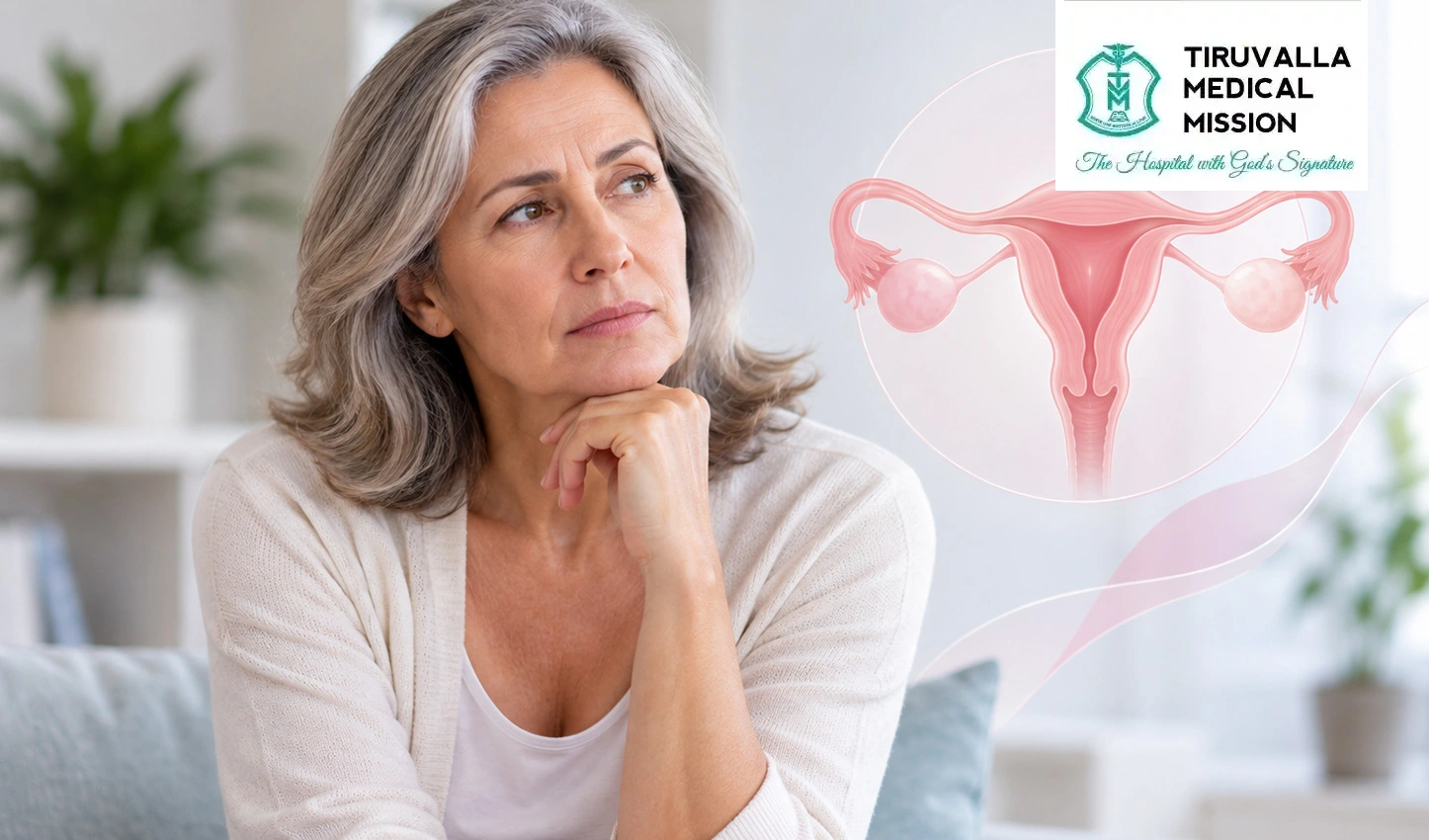
Postmenopausal Bleeding: Is It Normal or a Sign of a Serious Condition?
Medically Reviewed by: Dr. Sneha Anil

No amount of vaginal bleeding is considered normal after menopause. Even one episode of light spotting, a year or more after your last period, should be evaluated by a gynaecologist. Most cases turn out to be benign, with thinning of the vaginal or uterine lining being the most common cause. However, bleeding can also be an early warning sign of endometrial cancer, so timely assessment with an ultrasound and, if needed, a biopsy is the safest course of action.
Menopause marks the end of menstrual periods, and vaginal bleeding should not normally occur once a woman has gone through menopause. Postmenopausal bleeding refers to vaginal bleeding that occurs after 12 months or more without a menstrual period.
Seeing blood after menopause can understandably cause concern. However, postmenopausal bleeding does not automatically mean cancer. Several conditions can cause it, including vaginal or endometrial atrophy, polyps, infections, hormone therapy, and other medications. Bleeding patterns can raise questions well before menopause too — irregular or heavy periods are themselves among the most common menstrual disorders women bring to a gynaecologist, and the same principle applies afterwards: any unexpected bleeding deserves an answer, not a guess.
At TMM Hospital, women experiencing abnormal or postmenopausal bleeding can receive gynecological evaluation and diagnostic care to help identify the underlying cause and determine appropriate treatment.
What Is Postmenopausal Bleeding?
Postmenopausal bleeding refers to any vaginal bleeding that happens after a woman has gone through menopause, that is, after her periods have stopped completely for a full year. It is a symptom, not a diagnosis in itself, and it can originate from the vagina, cervix, or the lining of the uterus.
When Is Bleeding Considered Postmenopausal?
Menopause is confirmed once 12 consecutive months have passed without a menstrual period. Any bleeding that occurs after this 12-month mark, whether it happens once or repeatedly, falls under the umbrella of postmenopausal bleeding. Bleeding that occurs before the full year has elapsed (during perimenopause) is usually classed differently, as cycles can still be irregular during that transition.
What Does Postmenopausal Bleeding Look Like?
The appearance and amount can vary widely from one woman to another, and does not by itself indicate how serious the cause might be. It can show up as:
- Light spotting that you might only notice on tissue or underwear
- Pink or brown discharge, often a sign of older blood
- Fresh, red vaginal bleeding
- Heavier bleeding that resembles a menstrual period
Is Bleeding After Menopause Normal?
No — postmenopausal bleeding is never considered a normal menstrual period, and it should not be brushed aside as a late or irregular cycle. Once your body has completed the menopausal transition, the uterine lining is not expected to shed again, so any bleeding signals that something needs a closer look.
Even a single episode of light spotting warrants a medical assessment. It’s a common misconception that only heavy or repeated bleeding needs attention — in reality, the cause cannot be judged from the amount, colour, or duration of bleeding. A tiny spot of brown discharge can occasionally point to something as significant as a heavier episode, and vice versa. The only way to know what’s behind it is a clinical evaluation.
What Causes Postmenopausal Bleeding?
Several conditions can cause bleeding after menopause. Some are common and benign, while others require further investigation.
Vaginal and Endometrial Atrophy
After menopause, estrogen levels decrease. This can cause the tissues of the vagina and the lining of the uterus to become thinner, drier, and more fragile.
This condition, commonly called vaginal or endometrial atrophy, can sometimes result in spotting or bleeding. Bleeding may also occur after sexual intercourse because of increased tissue sensitivity.
Endometrial Polyps
Endometrial polyps are growths that develop from the lining of the uterus. Most are benign, but they can cause irregular spotting or bleeding.
Depending on their size, location, and appearance, a doctor may recommend monitoring or removing a polyp for further evaluation.
Endometrial Hyperplasia
Endometrial hyperplasia occurs when the lining of the uterus becomes thicker than expected because of changes in the growth of endometrial cells.
Some forms are associated with an increased risk of developing endometrial cancer. Therefore, postmenopausal bleeding associated with a thickened uterine lining may require further investigation, including tissue sampling.
Infections and Inflammation
Infections or inflammation affecting the vagina, cervix, or uterus can sometimes contribute to abnormal bleeding.
Other symptoms, such as unusual discharge, irritation, discomfort, or pelvic pain, may occur depending on the underlying condition.
Hormone Replacement Therapy
Some women experience spotting or vaginal bleeding after starting hormone replacement therapy (HRT). Certain HRT regimens can cause bleeding, particularly during the initial months of treatment.
However, bleeding that is unexpected, persistent, or occurs outside the expected pattern should still be discussed with a doctor.
Medications
Some medications may contribute to vaginal bleeding. Blood thinners and certain other medicines can sometimes be associated with bleeding, so it is important to tell your doctor about all prescription medicines, over-the-counter medicines, and supplements you are taking.
Gynecological Cancers
Although many cases of postmenopausal bleeding are caused by non-cancerous conditions, bleeding can sometimes be associated with cancers affecting the uterus or endometrium, cervix, vagina, or other gynecological organs.
Endometrial cancer commonly presents with postmenopausal bleeding. ACOG notes that approximately 90% of patients diagnosed with endometrial cancer have postmenopausal bleeding.
This does not mean that every episode of postmenopausal bleeding is cancer. Rather, it highlights why unexplained bleeding should be investigated promptly.
Understanding Postmenopausal Bleeding
Postmenopausal Bleeding: When Should You See a Doctor?
Watch this informative video by Dr. Sneha Anil, Consultant Gynecologist at TMM Hospital, to understand why bleeding after menopause should not be ignored. The video explains the possible causes of postmenopausal bleeding, warning signs to watch for, and when women should seek gynecological care.
Bleeding After More Than 12 Months Without Periods
If you have gone without a menstrual period for at least 12 months and then notice vaginal bleeding, arrange a medical assessment.
Repeated Episodes of Spotting
Repeated spotting should not be ignored, even when each episode is very light.
Persistent or recurrent bleeding may require additional testing to identify the underlying cause.
Heavy or Persistent Bleeding
Heavy or ongoing bleeding requires prompt medical attention. Your doctor may recommend investigations based on the amount and duration of bleeding, your medical history, and other symptoms.
Bleeding With Pelvic Pain or Other Symptoms
Bleeding accompanied by pelvic pain, unusual vaginal discharge, pain during intercourse, dizziness, weakness, or other concerning symptoms should be discussed with a healthcare professional promptly.
How Is Postmenopausal Bleeding Diagnosed?
The diagnostic approach depends on factors such as the woman’s symptoms, medical history, medications, risk factors, and findings during examination.
Current ACOG guidance updated in 2026 recommends combining transvaginal ultrasonography and endometrial tissue sampling as part of the initial evaluation in most patients with postmenopausal bleeding.
Medical History and Pelvic Examination
The doctor may ask about:
- When your last menstrual period occurred
- When the bleeding started
- How often it has occurred
- The amount and appearance of the bleeding
- Medications and hormone therapy
- Other symptoms
- Previous gynecological conditions
- Relevant personal or family medical history
A pelvic examination may also be performed to assess the vagina, cervix, and other pelvic structures.
Transvaginal Ultrasound
A transvaginal ultrasound uses a specialized ultrasound probe to create images of the uterus, endometrium, ovaries, and surrounding pelvic structures.
It can help doctors assess the thickness and appearance of the endometrial lining and identify abnormalities such as polyps or other structural changes.
Endometrial Biopsy
An endometrial biopsy involves taking a small sample of tissue from the lining of the uterus. The sample is examined in a laboratory to identify abnormal, precancerous, or cancerous cells.
Current ACOG guidance recommends endometrial tissue sampling as part of the initial evaluation for most patients presenting with postmenopausal bleeding.
Hysteroscopy
Hysteroscopy involves using a thin, camera-equipped instrument to examine the inside of the uterus through the cervix.
It can help identify abnormalities within the uterine cavity and may allow the doctor to take a tissue sample or remove certain growths when appropriate.
Additional Tests When Required
Depending on the findings, your doctor may recommend additional tests or procedures. These may include further imaging, sonohysterography, cervical evaluation, laboratory testing, or procedures such as dilation and curettage.
The investigations recommended depend on the suspected cause, examination findings, risk factors, and whether the bleeding is persistent or recurrent.
How Is Postmenopausal Bleeding Treated?
Treatment depends on the underlying cause of the bleeding, rather than the bleeding itself.
Treatment for Vaginal or Endometrial Atrophy
When tissue thinning is responsible, treatment may include vaginal moisturizers, lubricants, or prescribed local estrogen therapy when medically appropriate.
Removal of Polyps
Polyps causing bleeding may be removed, particularly when they require further examination or are contributing to recurrent symptoms.
Treatment for Infections
If an infection or inflammation is identified, appropriate treatment may be prescribed based on the specific cause.
Management of Endometrial Hyperplasia
Treatment for endometrial hyperplasia depends on the type of hyperplasia and individual risk factors. Management may include observation in selected cases, hormonal treatment, or surgery when indicated.
Treatment When Cancer Is Diagnosed
If testing identifies cancer, treatment depends on the type, stage, location, and other individual factors. Treatment may include surgery, radiation therapy, chemotherapy, hormone therapy, or a combination of treatments.
Early evaluation of postmenopausal bleeding can help identify serious conditions at an earlier stage.
Can Postmenopausal Bleeding Be Prevented?
Not every cause of postmenopausal bleeding can be prevented. However, maintaining regular gynecological care and discussing new symptoms promptly can help identify underlying conditions earlier.
Women taking HRT should follow their prescribed treatment plan and report unexpected or persistent bleeding to their healthcare provider.
It is also important not to self-diagnose postmenopausal bleeding based on its appearance or assume that it is simply a result of aging.
Postmenopausal Bleeding: What Women Should Remember
The key points to remember are:
- Postmenopausal bleeding is not a normal menstrual period.
- Even one episode of spotting should be medically assessed.
- Common causes include vaginal or endometrial atrophy, polyps, infections, HRT, and certain medications.
- Postmenopausal bleeding can sometimes be an early sign of endometrial or other gynecological cancer.
- The amount of bleeding does not determine how serious the underlying cause is.
- Diagnosis may involve a pelvic examination, ultrasound, endometrial biopsy, hysteroscopy, or other investigations.
- Treatment depends on the underlying cause.
- Prompt evaluation can help ensure appropriate treatment when a serious condition is present.
Postmenopausal Bleeding: When Should You See a Doctor?
This video section can help women understand what postmenopausal bleeding means, why it should be evaluated, common causes, and what to expect during a gynecological assessment.
FAQs
- 1. Is postmenopausal bleeding normal?
-
2. Can stress cause bleeding after menopause?
Stress is not a sufficient explanation for unexplained postmenopausal bleeding. Because bleeding after menopause can have several causes, it is important to have it assessed rather than assuming it is stress-related.
-
3. Does light spotting after menopause need to be checked?
Yes. Even a small amount of spotting or pink or brown discharge after menopause should be discussed with a doctor.
-
4. Can vaginal dryness cause bleeding after menopause?
Yes. Reduced estrogen levels after menopause can make vaginal tissues thinner and more fragile, which may contribute to spotting or bleeding, including after sexual activity. However, the cause should still be confirmed by a healthcare professional.
-
5. Can HRT cause postmenopausal bleeding?
Yes. Some hormone replacement therapy regimens can cause spotting or bleeding, particularly during the early stages of treatment. Unexpected or persistent bleeding should still be evaluated.
-
6. Does postmenopausal bleeding always mean cancer?
No. Many cases are caused by non-cancerous conditions such as tissue atrophy or polyps. However, because postmenopausal bleeding can also be a sign of cancer, medical evaluation is important.
-
7. What tests are used to investigate postmenopausal bleeding?
Depending on the individual situation, evaluation may include a pelvic examination, transvaginal ultrasound, endometrial biopsy, hysteroscopy, or additional tests. Current ACOG guidance recommends ultrasound and endometrial tissue sampling as part of the initial evaluation in most patients.
-
8. Can postmenopausal bleeding stop on its own?
It can stop even when the underlying cause has not been identified. However, the disappearance of bleeding does not necessarily mean that no evaluation is needed. Any unexplained bleeding after menopause should be discussed with a healthcare professional.
Don’t Ignore Bleeding After Menopause
Bleeding after menopause can feel alarming, but it’s a symptom your gynaecologist is well equipped to investigate and, in most cases, resolve with straightforward treatment. What matters most is not delaying that first evaluation.
Whether the cause turns out to be simple tissue thinning, a polyp, or something that needs closer monitoring, getting an accurate diagnosis early gives you, and your doctor the clearest path forward.
When to Seek Medical Care
Have you experienced bleeding after menopause? Don’t ignore even light spotting. Consult a gynecologist at TMM Hospital for an appropriate evaluation and personalized care.