


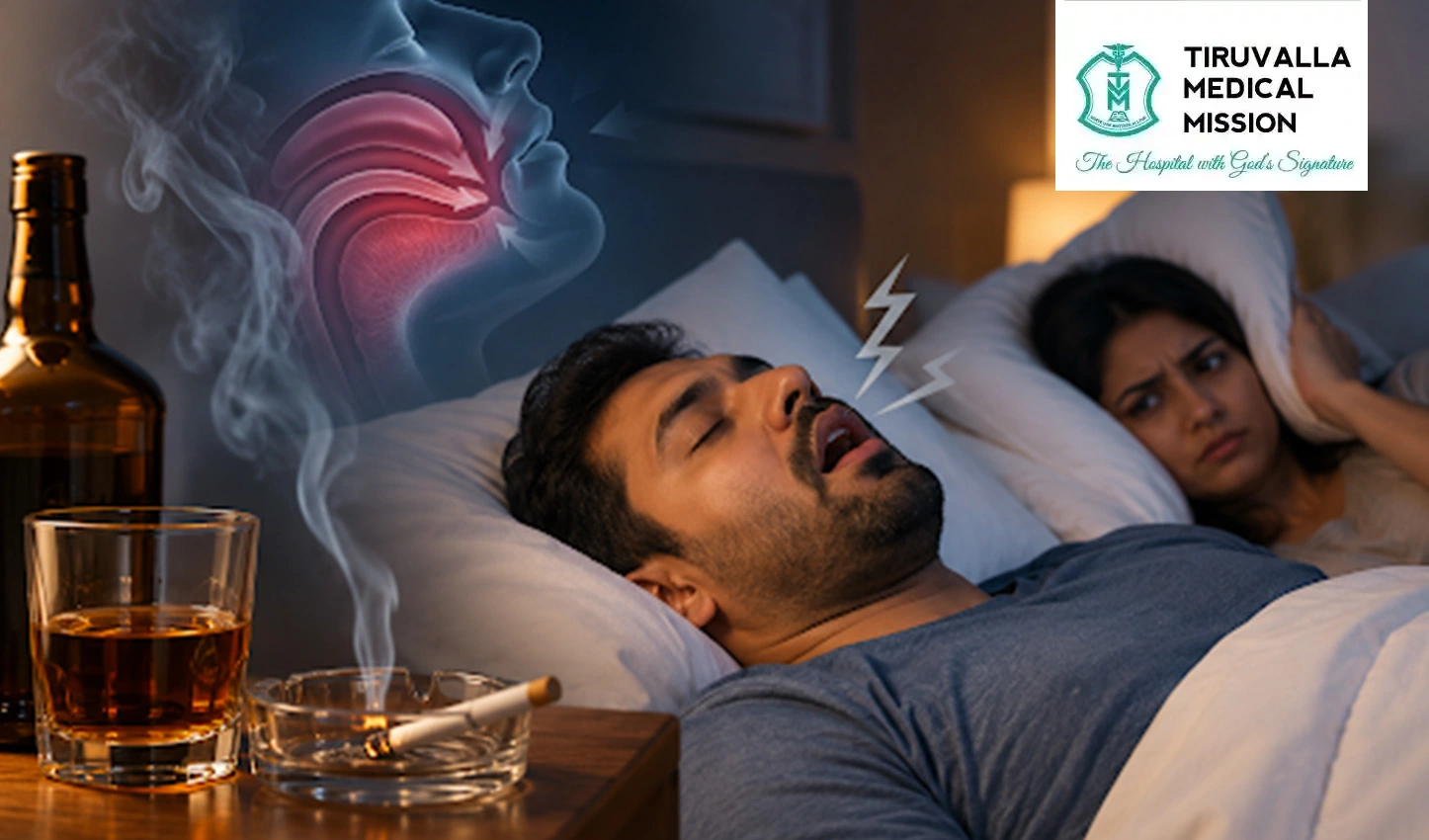
Can Smoking and Alcohol Make Snoring Worse? What You Should Know
Medically Reviewed by: Dr. Sandhya N.S

Yes. Smoking and alcohol can worsen snoring by affecting the upper airway and sleep quality. Alcohol relaxes the throat muscles, while smoking can irritate the nose and throat, increasing congestion and restricting airflow. If snoring is loud, frequent, worsening, or accompanied by breathing pauses, gasping, choking, or daytime sleepiness, consult an ENT specialist to identify the underlying cause.
Snoring is a common sleep-related concern that can affect both the person who snores and ng position, tiredness, or other factors. However, frequent or worsening snoring can sometimes indicate an underlying problem with the nose, throat, upper airway, or sleep breathing.
Lifestyle habits can also play an important role. Alcohol consumption and smoking are two factors that may contribute to louder or more frequent snoring. Alcohol can reduce muscle tone in the upper airway, while cigarette smoke can irritate the respiratory passages and contribute to inflammation and congestion.
Understanding how these habits affect breathing during sleep can help you take practical steps to reduce snoring and recognize when professional evaluation may be necessary.
What Causes Snoring?
How Does Snoring Happen?
Snoring occurs when airflow through the nose and throat becomes partially restricted while you sleep.
During sleep, the muscles and tissues in the upper airway naturally relax. If the airway becomes narrow, air passing through it can cause surrounding soft tissues to vibrate. These vibrations create the familiar sound of snoring.
The location and reason for airway narrowing can vary from person to person. For some people, the problem may involve nasal congestion, while others may have narrowing in the throat or other anatomical factors.
Snoring can therefore have several possible causes rather than one single explanation.
Common Factors That Can Increase Snoring
Several factors can increase the likelihood or severity of snoring, including:
- Nasal congestion: Blocked nasal passages can make breathing more difficult during sleep.
- Sleeping position: Sleeping on your back can encourage the tongue and soft tissues to move backward and narrow the airway.
- Excess weight: Additional tissue around the neck and upper airway may contribute to airway narrowing.
- Enlarged tonsils or other airway issues: Structural factors can affect the amount of space available for airflow.
- Alcohol consumption: Alcohol can relax upper-airway muscles and may make snoring more noticeable.
- Smoking: Smoke can irritate the nose and throat and contribute to airway inflammation.
- Certain medications: Some medicines that cause sedation or relaxation may influence sleep and breathing in certain people.
Because multiple factors can contribute to snoring, identifying the underlying cause is important when symptoms persist.
Can Alcohol Make Snoring Worse?
Yes. Alcohol can worsen snoring in some people, particularly when it is consumed close to bedtime.
How Alcohol Affects the Muscles of the Throat
Alcohol has a relaxing effect on the body. During sleep, this relaxation can contribute to reduced muscle tone in the upper airway.
When the muscles and soft tissues around the throat relax more than usual, the airway may become narrower. Air moving through this narrowed passage can increase tissue vibration, potentially resulting in louder or more frequent snoring.
This does not mean that everyone who drinks alcohol will snore. However, people who already snore may notice that their symptoms become more pronounced after drinking.
Why Drinking Before Bed May Increase Snoring
The timing of alcohol consumption can matter.
When alcohol is consumed relatively close to bedtime, its relaxing effects may overlap with the period when the body is entering sleep. This can make upper-airway narrowing more likely in susceptible individuals.
A person may therefore notice that they snore more loudly or consistently after an evening of drinking compared with nights when they do not drink.
Reducing or avoiding alcohol close to bedtime can be a useful lifestyle step for people trying to determine whether alcohol contributes to their snoring.
Does the Amount of Alcohol Matter?
The effect can vary depending on the individual and the amount consumed. Greater alcohol consumption may produce stronger sedating and muscle-relaxing effects, but there is no single amount that will cause snoring in everyone.
If you regularly notice worse snoring after drinking, consider reducing alcohol consumption and especially avoiding it near bedtime. If snoring continues despite lifestyle changes, an evaluation can help determine whether another issue is involved.
Can Smoking Increase Snoring?
Smoking may also contribute to snoring by affecting the nose, throat, and airways.
How Smoking Irritates the Airways
Cigarette smoke contains substances that can irritate the respiratory tract. Repeated exposure may contribute to inflammation and irritation of the tissues lining the airways.
When the tissues of the nose and throat become irritated or swollen, airflow may become more restricted. This can potentially contribute to vibration of the soft tissues during sleep and make snoring worse.
People who smoke may therefore experience snoring alongside other upper-airway symptoms such as throat irritation, coughing, or congestion.
Smoking and Nasal or Throat Congestion
Smoking can irritate the nasal passages and throat. Congestion or swelling in these areas may make it harder to breathe comfortably through the nose.
When nasal breathing becomes difficult, some people may breathe more through the mouth during sleep. Mouth breathing can contribute to dryness and may also influence airflow through the upper airway.
For people who already experience snoring, reducing exposure to cigarette smoke may help reduce one potential contributor.
How Secondhand Smoke May Affect Snoring
Exposure to tobacco smoke does not only affect people who smoke themselves. Secondhand smoke can also irritate the respiratory passages.
Regular exposure may contribute to irritation of the nose and throat, which can affect comfortable airflow during sleep.
Keeping the sleeping environment free from tobacco smoke can therefore be a useful step for anyone experiencing nighttime breathing or snoring concerns.
Why Do Smoking and Alcohol Make Snoring Worse?
Smoking and alcohol affect snoring in different ways, but their effects can overlap.
Relaxation of the Upper Airway Muscles
Alcohol can relax the muscles of the upper airway during sleep. When these muscles become more relaxed, the airway may become narrower, allowing the surrounding soft tissues to vibrate more easily and produce louder snoring. This effect can be more noticeable when alcohol is consumed close to bedtime.
Alcohol can also affect the body’s normal sleep pattern. Although it may make a person feel sleepy initially, it can change normal sleep architecture, including the balance between non-REM (NREM) sleep and REM sleep, and may contribute to more disrupted or less restorative sleep later in the night.
Airway Irritation and Inflammation
Smoking can irritate the tissues lining the respiratory tract. Ongoing exposure to smoke may contribute to swelling and inflammation, potentially making airflow more difficult.
Increased Nasal Congestion
Nasal congestion can interfere with normal airflow. Smoking-related irritation and other causes of nasal blockage may encourage mouth breathing and contribute to snoring.
Changes in Sleep Quality
This disruption to sleep architecture means the sleep obtained is often lighter or less restorative, even if total sleep time seems adequate. Poor-quality sleep can make nighttime symptoms more noticeable and contribute to daytime tiredness, brain fog, and reduced concentration.
When factors such as alcohol consumption, smoking, excess weight, and fat around the neck occur together, they may increase the likelihood of airway narrowing, snoring, and disturbed sleep. Persistent snoring,especially when accompanied by breathing pauses, gasping, choking, or daytime sleepiness,should be evaluated to determine whether an underlying sleep-related breathing problem is present.
Is Snoring a Sign of Sleep Apnea?
Snoring does not always mean that a person has sleep apnea. Many people snore without having obstructive sleep apnea (OSA).
However, loud and persistent snoring can sometimes be one of the symptoms of OSA.
Obstructive sleep apnea occurs when the upper airway repeatedly becomes blocked or significantly narrowed during sleep. These episodes can interfere with normal breathing and sleep quality.
This is why persistent snoring should not automatically be dismissed as simply a nuisance, particularly when other symptoms are present.
Warning Signs That May Suggest Sleep Apnea
Speak with a healthcare professional if snoring is accompanied by symptoms such as:
- Loud, frequent snoring
- Pauses in breathing during sleep
- Gasping or choking during sleep
- Excessive daytime sleepiness
- Morning headaches
- Difficulty concentrating
- Waking up feeling unrefreshed
A partner or family member may sometimes notice breathing pauses or gasping before the person who snores becomes aware of them.
Watch: Dr. Roby Thomas Koshy Explains Why Smoking and Alcohol Worsen Snoring
For a better understanding of how smoking and alcohol affect the upper airway and contribute to snoring, watch the video below, featuring Dr. Roby Thomas Koshy, Consultant ENT Surgeon at Tiruvalla Medical Mission (TMM) Hospital.
The video provides practical guidance to help you understand these risk factors and recognize when to seek professional evaluation.
When Should You See an ENT Specialist for Snoring?
Not every episode of snoring requires medical attention. However, an ENT evaluation can be useful when snoring is persistent, severe, or associated with other symptoms.
Your Snoring Is Frequent or Getting Worse
If you snore regularly or notice that your snoring has gradually become louder, an evaluation may help identify what is contributing to the problem.
You Have Breathing Pauses or Difficulty Breathing During Sleep
Breathing pauses during sleep should not be ignored. They may indicate a sleep-related breathing disorder that requires further assessment.
You Wake Up Gasping or Choking
Repeated episodes of waking with gasping or choking can indicate that breathing is being interrupted during sleep.
Snoring Is Affecting Your Sleep or Daily Life
If snoring is disturbing your sleep, affecting your partner’s sleep, or contributing to daytime fatigue, it is worth discussing with a healthcare professional.
Lifestyle Changes Have Not Improved Your Snoring
If reducing alcohol, avoiding smoking, changing sleeping position, and addressing nasal congestion do not improve your symptoms, there may be an underlying airway or sleep-related issue that needs evaluation.
How Can You Reduce Snoring?
Lifestyle changes may help reduce snoring in some people.
Limit Alcohol, Especially Before Bed
If alcohol appears to worsen your snoring, reducing consumption or avoiding alcohol close to bedtime may help.
Consider Quitting Smoking
Stopping smoking can reduce ongoing exposure of the airways to tobacco smoke. If you smoke and want to quit, speak with a healthcare professional about evidence-based smoking cessation support.
Maintain a Healthy Weight
For people who are overweight, gradual and sustainable weight management may help reduce airway narrowing and improve snoring.
Try Sleeping on Your Side
For some people, sleeping on the side rather than the back can reduce airway narrowing and improve snoring.
Keep Your Nasal Passages Clear
If nasal congestion is contributing to snoring, addressing the underlying cause may improve airflow. Persistent nasal blockage should be assessed by a healthcare professional.
Maintain a Consistent Sleep Schedule
A regular sleep routine can support healthier sleep habits. Avoiding severe sleep deprivation may also be helpful for people who notice that their snoring becomes worse when they are extremely tired.
How Is Persistent Snoring Evaluated?
When snoring continues despite lifestyle changes, a healthcare professional may assess the possible underlying causes.
Medical and Sleep History
The evaluation may begin with questions about:
- How often you snore
- How loud the snoring is
- Whether symptoms are worse after alcohol
- Smoking or tobacco exposure
- Sleeping position
- Nasal blockage
- Daytime sleepiness
- Gasping or choking during sleep
- Witnessed breathing pauses
Information from a sleeping partner can sometimes be particularly useful.
Examination of the Nose and Throat
An ENT examination can help assess the nose, throat, tonsils, tongue, and other structures that may influence airflow.
Checking for Airway Obstruction
Depending on the symptoms, the specialist may look for structural or functional factors that could be narrowing the upper airway.
Sleep Study When Required
If obstructive sleep apnea is suspected, a sleep study may be recommended.
Home Sleep Apnea Testing
Some people may be suitable for a home-based sleep apnea test. This can collect information about breathing and other sleep-related measurements while the person sleeps at home.
Overnight Sleep Study
A formal overnight sleep study, also known as polysomnography, can provide more detailed information about breathing, oxygen levels, sleep stages, and other factors.
The appropriate test depends on the person’s symptoms and clinical situation.
Treatment Options for Persistent Snoring
Treatment should focus on why the person is snoring, rather than simply trying to eliminate the sound.
Lifestyle and Behavioural Changes
Depending on the cause, treatment may begin with lifestyle measures such as reducing alcohol consumption, stopping smoking, maintaining a healthy weight, and changing sleep position.
Treating Nasal or Airway Problems
If nasal congestion, enlarged tissues, or another airway problem is contributing to snoring, treatment may focus on the specific underlying issue.
Oral Appliances When Appropriate
For selected patients, an oral appliance may help reposition structures in the mouth and improve airflow during sleep. These devices are not appropriate for everyone and should be considered based on professional assessment.
Treatment for Obstructive Sleep Apnea
If testing confirms obstructive sleep apnea, treatment may include therapies such as positive airway pressure, oral appliances, lifestyle measures, or other interventions depending on the severity and underlying cause.
Persistent snoring should therefore be evaluated based on the individual rather than treated with a one-size-fits-all approach.
FAQs
- 1. Can drinking alcohol make snoring worse?
-
2. Does smoking cause snoring?
Smoking may contribute to snoring by irritating the nose and throat and promoting airway inflammation or congestion. However, snoring can have many causes.
-
3. Should I stop drinking alcohol to reduce snoring?
If you notice that your snoring becomes worse after drinking, reducing alcohol consumption,especially near bedtime,may help. Persistent snoring should still be evaluated if it continues.
-
4. Can quitting smoking help with snoring?
Quitting smoking can reduce exposure to airway-irritating tobacco smoke and may help improve symptoms related to airway irritation. The effect on snoring varies depending on its underlying cause.
-
5. Is snoring always a sign of sleep apnea?
No. Snoring can occur without sleep apnea. However, loud persistent snoring combined with breathing pauses, gasping, choking, or excessive daytime sleepiness should be assessed.
-
6. Why do I snore more after drinking?
Alcohol can increase relaxation of the upper-airway muscles during sleep. This may narrow the airway and increase tissue vibration, resulting in louder snoring.
-
7. Can secondhand smoke make snoring worse?
Secondhand smoke can irritate the respiratory passages. For some people, ongoing exposure may contribute to congestion or airway irritation that can worsen snoring.
-
8. Can sleeping position affect snoring?
Yes. Sleeping on your back can cause the tongue and soft tissues to move backward and narrow the airway, which may worsen snoring. Sleeping on your side may help reduce snoring for some people.
Understanding the Link Between Lifestyle Habits and Snoring
Smoking and alcohol can contribute to or worsen snoring, although they are not the only possible causes. Alcohol may relax the upper-airway muscles, while smoking can irritate the nose and throat and contribute to airway inflammation or congestion.
Simple lifestyle changes—such as limiting alcohol before bedtime, avoiding tobacco smoke, maintaining a healthy weight, sleeping on your side, and addressing nasal congestion—may help some people reduce snoring.
However, persistent or loud snoring should not always be treated as a minor inconvenience. Breathing pauses, gasping, choking, excessive daytime sleepiness, and waking up unrefreshed may indicate an underlying sleep-related breathing disorder such as obstructive sleep apnea.
Identifying the cause is the first step toward choosing the right treatment.
Get Expert Advice for Persistent Snoring
If you or your partner experiences frequent, loud, or worsening snoring, especially when it is accompanied by breathing pauses, gasping, choking, or daytime sleepiness, consider consulting our specialist at Tiruvalla Medical Mission Hospital.
A proper evaluation can help determine whether the snoring is related to nasal blockage, throat or airway anatomy, fat deposits around the neck, lifestyle factors, sleep-stage disruption, or an underlying sleep-related breathing problem.
Don’t ignore persistent snoring. Understanding the cause can help you take the right steps toward better sleep and healthier nighttime breathing.
Book an appointment with our ENT specialists at TMM Hospital.