


Hearing Loss in Adults: Types, Causes & When to Get a Hearing Test
Medically Reviewed by: Dr. Roby Thomas Koshy

Hearing loss in adults can develop gradually due to aging, prolonged noise exposure, ear infections, medical conditions, certain medications, or ear injuries. Early hearing evaluation helps identify the underlying cause and supports timely treatment to improve communication and overall quality of life.
Hearing loss affects millions of adults worldwide and becomes more common with age. According to the World Health Organization (WHO), over 1.5 billion people experience some degree of hearing impairment, with many cases affecting adults over 60. However, hearing loss is not limited to older adults—it can occur at any age due to prolonged noise exposure, infections, certain medications, or underlying medical conditions.
Recognizing the early warning signs and seeking timely evaluation by an ENT specialist can help identify the cause and prevent further hearing deterioration. This guide explains what hearing loss is, its common causes in adults, symptoms you should never ignore, available diagnostic tests, treatment options, and practical ways to protect your hearing.
What Is Hearing Loss?
Hearing loss refers to a partial or complete reduction in the ability to hear sounds in one or both ears. It may affect certain sound frequencies, such as high-pitched voices, or impact hearing across a wider range of sounds. Some people experience a gradual decline over several years, while others notice sudden changes that require immediate medical attention.
Understanding how hearing works can help explain why hearing loss occurs and why different treatment approaches are needed depending on the underlying cause.
How the Ear Processes Sound
Hearing is a complex process involving three main parts of the ear working together to convert sound waves into signals that the brain can understand.
Outer Ear
The visible part of the ear and the ear canal collect sound waves and direct them toward the eardrum.
Middle Ear
Sound waves cause the eardrum to vibrate. Three tiny bones—the malleus, incus, and stapes—amplify these vibrations before passing them to the inner ear.
Inner Ear
Inside the cochlea, thousands of delicate hair cells convert sound vibrations into electrical signals. These signals travel through the auditory nerve to the brain, where they are interpreted as sound.
A problem affecting any part of this hearing pathway—from earwax blockage to damage within the cochlea or auditory nerve—can result in hearing loss.
Types of Hearing Loss
Hearing loss is generally classified into three main types:
- Conductive hearing loss – Occurs when sound cannot travel efficiently through the outer or middle ear due to earwax buildup, infection, fluid, or structural abnormalities.
- Sensorineural hearing loss – Results from damage to the inner ear or auditory nerve. This is the most common form in adults and is often associated with aging or prolonged noise exposure.
- Mixed hearing loss – A combination of conductive and sensorineural hearing loss.
Degrees of Hearing Loss
The severity of hearing loss is measured in decibels (dB) during a hearing assessment and is generally classified as:
- Mild: Difficulty hearing soft speech or conversations in noisy environments.
- Moderate: Regular conversations become challenging without assistance.
- Severe: Loud speech is difficult to hear.
- Profound: Very little or no hearing, often requiring advanced hearing devices or cochlear implants.
Only a comprehensive hearing assessment can accurately determine the degree and type of hearing loss. Early evaluation helps ensure the most appropriate treatment and rehabilitation plan.
Common Causes of Hearing Loss in Adults
Aging (Presbycusis)
Age-related hearing loss, medically known as presbycusis, is one of the most common causes of hearing impairment in adults. It develops gradually as the delicate hair cells inside the cochlea naturally deteriorate over time. High-frequency sounds are often affected first, making conversations increasingly difficult, particularly in noisy environments.
Presbycusis usually affects both ears and becomes more noticeable after the age of 60, although age-related changes may begin much earlier.
Noise Exposure (Noise-Induced Hearing Loss)
Repeated exposure to loud sounds from industrial machinery, concerts, firearms, power tools, or prolonged headphone use can permanently damage the sensitive hair cells inside the inner ear.
Unlike age-related hearing loss, noise-induced hearing loss is largely preventable through proper hearing protection and safe listening habits.
Ear Infections and Fluid Buildup
Middle ear infections may cause fluid accumulation behind the eardrum, temporarily reducing hearing. While many cases improve after the infection resolves, repeated infections or delayed treatment may contribute to long-term hearing problems.
Earwax Blockage (Cerumen Impaction)
Earwax helps protect the ear canal, but excessive buildup can block sound from reaching the eardrum. Impacted earwax is one of the most common causes of temporary hearing loss and can often be safely removed by a healthcare professional.
Ototoxic Medications
Certain medications may affect hearing as a side effect. Some antibiotics, chemotherapy drugs, high-dose aspirin, loop diuretics, and other medications can damage the inner ear in susceptible individuals. Patients taking these medications should discuss hearing monitoring with their healthcare provider when appropriate.
Chronic Health Conditions (Diabetes, Hypertension, and Cardiovascular Disease)
The inner ear depends on a healthy supply of blood and functioning nerves. Conditions such as diabetes, hypertension, and cardiovascular disease can affect these delicate structures, increasing the risk of hearing loss over time.
People living with these conditions are encouraged to undergo regular hearing evaluations as part of their overall health management. Managing chronic diseases effectively may also help reduce the risk of progressive hearing impairment.
Genetics and Family History
Genetics can influence both the likelihood and timing of age-related hearing loss. Individuals with a family history of hearing impairment may have a greater chance of developing hearing problems earlier in life. Some inherited conditions can also contribute to progressive or sudden hearing loss.
Head Injury or Trauma
Head injuries, skull fractures, or sudden exposure to extremely loud noises such as explosions can damage the middle or inner ear. Hearing loss caused by trauma may occur immediately and sometimes requires urgent medical evaluation.
Tumors (Acoustic Neuroma)
Although uncommon, a benign tumour called an acoustic neuroma can develop on the auditory nerve. It often causes hearing loss in one ear and may be accompanied by ringing in the ears, dizziness, or balance problems. Early diagnosis is important for appropriate treatment.
Signs and Symptoms You Shouldn’t Ignore
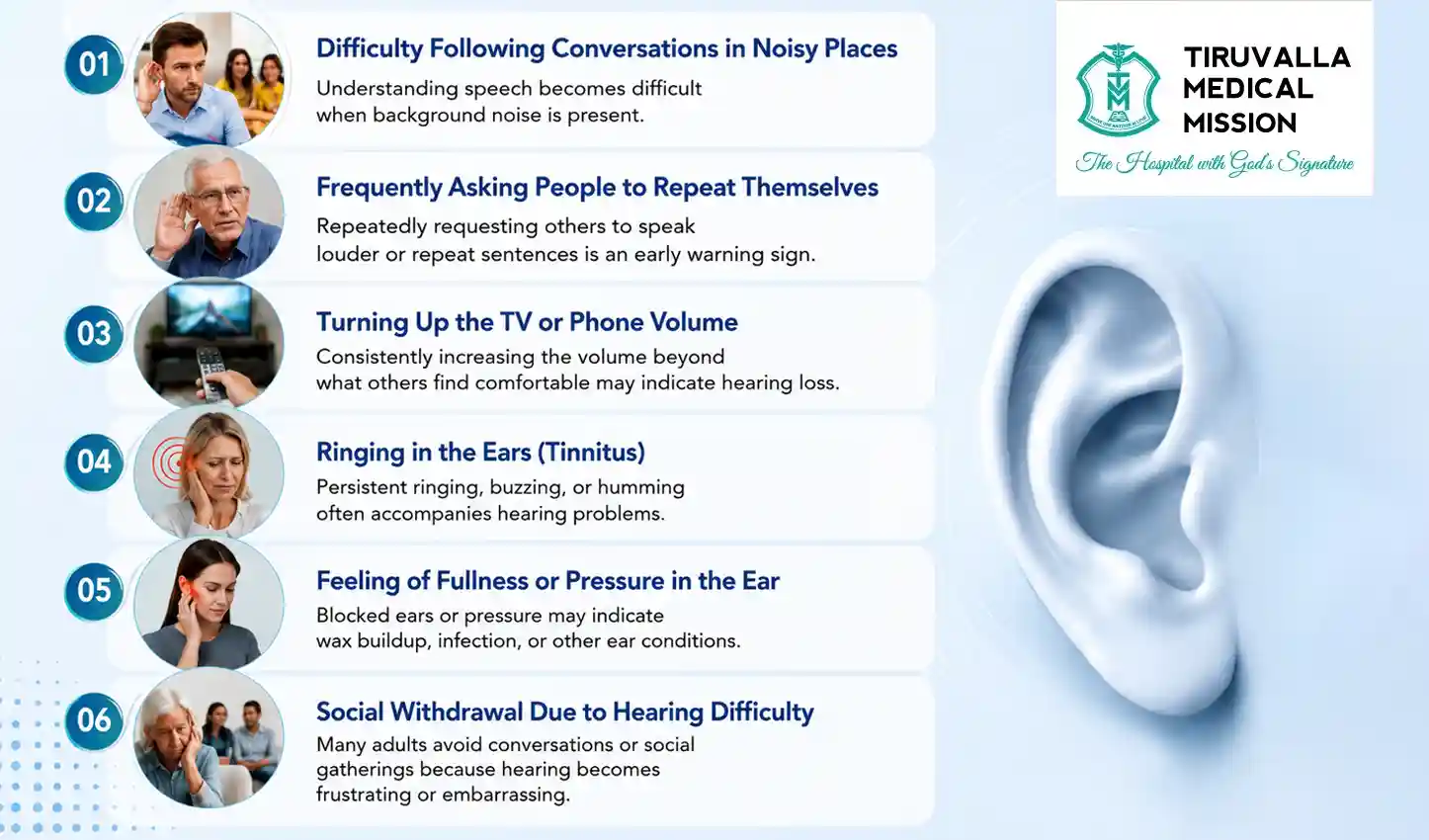
Hearing loss often develops gradually, making it easy to overlook the early warning signs. Many people adapt by increasing the television volume or asking others to repeat themselves without realizing their hearing has changed.
If you notice persistent hearing difficulties, seeking an evaluation from an ENT specialist can help identify the underlying cause and determine the most appropriate treatment.
Common symptoms of hearing loss include:
- Difficulty understanding conversations, especially in noisy places
- Frequently asking people to repeat themselves
- Turning up the volume on the television, phone, or radio
- Ringing, buzzing, or humming sounds in the ears (tinnitus)
- Feeling that people are mumbling during conversations
- Difficulty hearing children’s or high-pitched voices
- Trouble hearing on the telephone
- Withdrawing from conversations or social gatherings
How Hearing Loss Affects Daily Life
Impact on Communication and Relationships
Hearing difficulties can make conversations frustrating for both the individual and their loved ones. Misunderstandings may become more frequent, leading some people to avoid social situations altogether.
Link to Cognitive Decline and Mental Health
Research suggests that untreated hearing loss may be associated with memory problems, anxiety, depression, and cognitive decline. If hearing difficulties are affecting your emotional wellbeing, discussing both hearing care and overall mental health with your healthcare provider is important.
Workplace and Safety Concerns
Reduced hearing may make it difficult to hear alarms, warning signals, important instructions, or conversations in the workplace. Early treatment can improve communication, confidence, and overall safety.
When Should You Get a Hearing Test?
Age-Based Recommendations
Adults aged 50 years and older should consider regular hearing assessments, even if they do not notice obvious hearing problems. Routine screening helps detect gradual hearing loss before it begins affecting daily life.
Warning Signs That Signal It’s Time
You should arrange a hearing assessment if you experience any of the following:
- Difficulty understanding conversations
- Frequently asking people to repeat themselves
- Increasing the volume on electronic devices
- Persistent ringing in the ears
- A feeling of fullness or blockage in the ear
- Difficulty hearing in busy environments
- Sudden hearing loss in one or both ears (requires urgent medical attention)
- Family members noticing changes in your hearing
How Often Adults Should Have Their Hearing Checked
Healthy adults should consider a baseline hearing assessment and repeat testing every few years. Individuals with hearing symptoms, occupational noise exposure, chronic health conditions, or a family history of hearing loss may require more frequent evaluations.
What to Expect During a Hearing Test
Types of Hearing Tests
Your hearing evaluation may include one or more of the following tests:
- Pure-tone audiometry
- Speech recognition testing
- Tympanometry
- Bone conduction testing (when required)
How Long Does a Hearing Test Take?
Most hearing assessments take approximately 30 to 60 minutes, depending on the tests required.
Painless and Non-Invasive
Hearing tests are safe, painless, and non-invasive. There is no recovery period, and patients can resume their normal daily activities immediately after the assessment.
Treatment Options for Adult Hearing Loss
The right treatment for hearing loss depends on its type, severity, and underlying cause. Following a comprehensive hearing assessment, your ENT specialist or audiologist will recommend the most appropriate treatment plan to improve hearing and overall quality of life.
Hearing Aids
Modern digital hearing aids amplify sounds while reducing background noise, making conversations clearer and improving communication in daily life. Today’s hearing aids are smaller, more comfortable, and can be customized to suit different levels of hearing loss and individual lifestyles.
Cochlear Implants
Individuals with severe or profound sensorineural hearing loss who receive limited benefit from hearing aids may be candidates for cochlear implants. These surgically implanted electronic devices bypass damaged parts of the inner ear and directly stimulate the auditory nerve, helping improve hearing and speech understanding.
Medical or Surgical Treatment
Some causes of hearing loss can be treated medically or surgically. Conditions such as ear infections, impacted earwax, middle ear fluid, or structural abnormalities may improve with medications or appropriate surgical procedures, depending on the diagnosis.
Assistive Listening Devices and Lifestyle Adjustments
In addition to hearing aids, assistive listening devices and communication strategies can make everyday conversations easier. Captioned telephones, television listening systems, smartphone accessibility features, and other assistive technologies help improve communication and support greater independence.
Preventing Hearing Loss: Practical Tips
Although not every type of hearing loss can be prevented, adopting healthy hearing habits can significantly reduce the risk of noise-related damage and help preserve hearing as you age.
Protect Your Ears from Loud Noise
Reducing exposure to loud sounds is one of the most effective ways to protect your hearing.
- Wear ear protection in noisy environments.
- Keep headphone and earbud volume at safe levels.
- Follow the 60/60 rule—listen at no more than 60% volume for no longer than 60 minutes at a time.
- Take regular breaks from prolonged noise exposure.
Regular Hearing Checkups
Routine hearing assessments help detect hearing changes before they become severe. Early diagnosis allows timely treatment and better long-term hearing outcomes.
Regular hearing evaluations, together with routine preventive health check-ups, provide a more complete picture of your overall health.
Managing Underlying Health Conditions
Proper management of chronic conditions such as diabetes, hypertension, and cardiovascular disease helps maintain healthy blood circulation to the inner ear and may reduce the risk of hearing impairment.
Why Choose TMM Hospital for Hearing Evaluation and Care?
At TMM Hospital, our experienced ENT specialists provide comprehensive evaluation, diagnosis, and management of hearing disorders using advanced diagnostic technology and evidence-based treatment approaches. Whether your hearing loss is caused by aging, infection, noise exposure, or an underlying medical condition, our team develops personalized treatment plans focused on improving hearing, communication, and quality of life.
Our patient-centred approach includes:
- Comprehensive hearing evaluations
- Experienced ENT specialists
- Advanced diagnostic equipment
- Personalized treatment plans
- Medical and surgical management when required
- Long-term hearing care and follow-up
- Compassionate, patient-focused support
FAQs
- 1. Is hearing loss a normal part of aging?
-
2. Can hearing loss be reversed?
It depends on the cause. Hearing loss caused by earwax buildup or infections is often reversible, while age-related or noise-induced hearing loss is usually permanent but can be effectively managed with hearing aids or other treatments.
-
3. What’s the difference between hearing loss and tinnitus?
Hearing loss refers to reduced ability to hear sounds, whereas tinnitus is the perception of ringing, buzzing, or other sounds without an external source. The two conditions often occur together but are not the same.
-
4. Can hearing loss happen suddenly?
Yes. Sudden hearing loss is considered a medical emergency and should be evaluated by an ENT specialist as soon as possible for the best chance of recovery.
-
5. Do I need a doctor’s referral for a hearing test?
Referral requirements vary depending on the healthcare provider and insurance plan. Many hearing centres and ENT clinics accept direct appointments without a referral.
-
6. Are hearing aids covered by insurance?
Insurance coverage varies by provider and policy. Some plans cover hearing tests, while others may also provide partial or full coverage for hearing aids.
-
7. Can loud headphone use really cause permanent hearing loss?
Yes. Listening to music at high volumes for extended periods can permanently damage the delicate hair cells inside the inner ear. Following safe listening habits helps protect your hearing.
Don’t Let Hearing Loss Go Unnoticed
Hearing loss in adults is common, often develops gradually, and may go unnoticed until it begins affecting daily life. Whether it’s caused by aging, prolonged noise exposure, earwax buildup, infection, or an underlying medical condition, early diagnosis is the key to preserving hearing and improving communication.
Prompt evaluation not only helps identify the underlying cause but also allows timely treatment that can protect your relationships, independence, workplace performance, and overall quality of life.
Concerned About Your Hearing? Get Expert Evaluation
If you’ve noticed difficulty hearing conversations, persistent ringing in your ears, frequently asking people to repeat themselves, or increasing the volume on your television or phone, don’t ignore the signs.
Schedule a hearing evaluation with the ENT specialists at TMM Hospital today and take the first step toward clearer hearing, better communication, and improved quality of life. For more information, you can also get in touch with our team.