


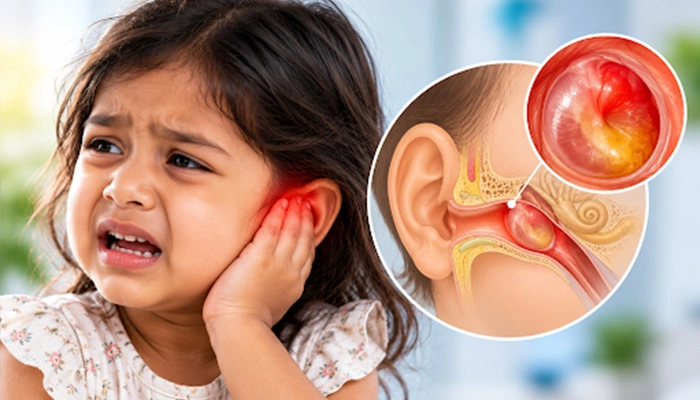
Acute Otitis Media
Acute otitis media (AOM) is a sudden infection and inflammation of the middle ear, the air-filled space behind the eardrum. It commonly affects infants and young children and often develops during or after a cold or other upper respiratory infection. The condition can be caused by viruses or bacteria and may lead to ear pain, fever, irritability, difficulty sleeping, and temporary hearing changes.
The infection occurs when fluid builds up behind the eardrum, creating pressure and discomfort. Children are more susceptible because their Eustachian tubes, which help equalise pressure and drain fluid from the middle ear, are shorter and more horizontal than those of adults. Although many cases improve within a few days, some may require medical treatment depending on the patient’s age, symptoms, and clinical findings.
Causes of Acute Otitis Media
Acute otitis media commonly develops when viruses or bacteria enter the middle ear, often following a respiratory infection. When the Eustachian tube becomes swollen or blocked, fluid can accumulate behind the eardrum, creating conditions that allow infection to develop.
Causes of Acute Otitis Media
Acute otitis media happens when the Eustachian tube becomes swollen or blocked. Fluid then collects behind the eardrum, and germs multiply in it.
Common triggers include:
- Common cold and other respiratory infections: the most frequent cause, as infection spreads from the nose and throat
- Sinus infections and sore throat
- Allergies: nasal swelling can block the Eustachian tube
- Enlarged adenoids: swollen tissue at the back of the nose can block drainage
- Exposure to tobacco smoke and air pollution
- Feeding a baby while lying flat, which can let milk flow towards the Eustachian tube
Symptoms of Acute Otitis Media
Symptoms can develop quickly and vary according to the patient’s age and the severity of the infection.
Common symptoms include:
- Earache or persistent ear discomfort.
- Fever.
- A feeling of pressure or fullness in the ear.
- Reduced or muffled hearing.
- Fluid or pus draining from the ear.
- Irritability, crying, or difficulty sleeping in young children.
- Reduced appetite or difficulty feeding in infants.
- Tugging or rubbing the affected ear.
- Occasional dizziness or loss of balance.
Babies and young children may be unable to describe their discomfort. Parents should look for changes in feeding, sleep, behaviour, and responses to sounds.
Risk Factors for Acute Otitis Media
Although anyone can develop a middle ear infection, certain factors increase the likelihood of developing acute otitis media.
- Young age, particularly during infancy and early childhood.
- Frequent colds or respiratory infections.
- Exposure to cigarette smoke or other secondhand smoke.
- Attendance at childcare settings where infections spread easily.
- Incomplete recommended childhood vaccinations.
- Enlarged adenoids or conditions affecting the Eustachian tubes.
- Certain anatomical conditions, including cleft palate.
Understanding these risk factors can help families take preventive measures and recognise recurring infections early.
Complications
Most cases clear without problems, but complications can occur, especially after delayed or repeated infections:
- Temporary hearing loss while fluid stays behind the eardrum
- A perforated eardrum, which usually heals but may need treatment
- Fluid remaining in the middle ear for weeks or months
- Repeated or long-lasting ear discharge
- Delayed speech and language development in young children with frequent infections
- Spread of infection to the bone behind the ear (mastoiditis)
- Rarely, facial nerve weakness, or infection spreading to the brain and its coverings (meningitis)
Diagnosis of Acute Otitis Media
An accurate diagnosis is important to distinguish acute otitis media from other ear conditions, including fluid accumulation without active infection.
An ENT specialist or other qualified healthcare professional may perform the following assessments:
- Medical history: Reviewing symptoms, recent respiratory infections, fever, and previous ear infections.
- Otoscopy: Examining the ear canal and eardrum using a specialised lighted instrument.
- Pneumatic otoscopy: Assessing eardrum movement to identify fluid in the middle ear.
- Tympanometry: Measuring eardrum movement and middle ear pressure when additional assessment is required.
- Hearing assessment: Evaluating hearing if symptoms persist or recurrent infections raise concerns.
Laboratory tests and imaging are not routinely required for uncomplicated cases. Additional investigations may be recommended when complications or other underlying conditions are suspected.
Treatment for Acute Otitis Media
Treatment depends on the patient’s age, symptom severity, examination findings, and overall health. Many uncomplicated infections improve within a few days, and antibiotics are not necessary in every case.
Pain and Fever Management
A healthcare professional may recommend age-appropriate pain relief to reduce earache and fever. A warm compress placed gently against the affected ear may also provide comfort.
Antibiotic Treatment
Antibiotics may be prescribed when the infection is severe, symptoms persist or worsen, or the patient is considered at increased risk of complications. The choice of medication depends on the patient’s age, medical history, allergies, and clinical assessment.
Antibiotics should only be taken as prescribed. They are not effective against viral infections and should not be used unnecessarily.
Monitoring and Follow-Up
For selected patients with mild symptoms, a doctor may recommend observation with appropriate follow-up. Medical reassessment is important if symptoms do not improve within two to three days or become worse.
Management of Persistent Fluid or Hearing Problems
Fluid may remain behind the eardrum after the acute infection resolves. If hearing difficulties persist or infections recur frequently, further assessment by an ENT specialist may be necessary.
Possible Complications of Acute Otitis Media
Most cases resolve without serious problems. However, untreated or severe infections can occasionally lead to complications, including:
- Eardrum perforation: A tear in the eardrum that may cause fluid or pus to drain from the ear.
- Persistent fluid accumulation: Fluid behind the eardrum may temporarily affect hearing.
- Recurrent ear infections: Repeated episodes may require further investigation.
- Hearing difficulties: Persistent hearing problems in children may affect speech and language development.
- Mastoiditis: A rare but serious infection involving the bone behind the ear.
- Spread of infection: In rare cases, the infection may spread to surrounding structures and require urgent hospital treatment.
Prevention of Acute Otitis Media
Although not every ear infection can be prevented, several measures may help reduce the risk.
- Keep childhood vaccinations up to date, including recommended influenza and pneumococcal vaccines.
- Practise regular handwashing to reduce the spread of respiratory infections.
- Avoid exposing children to cigarette smoke.
- Follow appropriate infant-feeding guidance.
- Avoid putting cotton buds or other objects into the ear canal.
- Seek medical advice for frequent respiratory infections or recurring ear problems.
- Arrange follow-up when a child has persistent hearing difficulties after an ear infection.
When to see a doctor
Consult an ENT specialist if you or your child experiences persistent ear pain, fever, reduced hearing, fluid or discharge from the ear. Medical evaluation is especially important if symptoms worsen or do not improve within 2–3 days.
Seek prompt medical attention if you notice any of the following:
- Severe or worsening ear pain.
- High fever or persistent fever.
- Pus, fluid, or blood draining from the ear.
- New or significant hearing difficulties.
- Swelling, redness, or tenderness behind the ear.
- Dizziness, loss of balance, or unusual drowsiness.
- Symptoms in an infant younger than three months, particularly a temperature of 38°C (100.4°F) or higher.
Experiencing Ear Pain or Symptoms of a Middle Ear Infection?
Early assessment can help relieve pain, protect hearing and prevent complications. Book an appointment at Tiruvalla Medical Mission (TMM Hospital) to seek appropriate ENT evaluation and care.
FAQ
- 1.What is the main cause of acute otitis media?
-
2.Is acute otitis media contagious?
The ear infection itself does not spread from person to person, but the colds and other infections that lead to it can. Good hand hygiene helps reduce the risk.
-
3.Can acute otitis media go away without antibiotics?
Some mild cases improve on their own, particularly in older children, but a doctor should decide this. Infants, severe infections and cases with discharge usually need antibiotics.
-
4.Can acute otitis media cause hearing loss?
Yes. Fluid behind the eardrum can muffle hearing temporarily. Repeated or untreated infections can cause longer-lasting problems, so follow-up is important.
-
5.How long does an ear infection last?
Pain and fever often improve within two to three days of treatment, but fluid in the middle ear can take several weeks to clear. A follow-up visit confirms recovery.